The citrus industry’s multi-faceted approach to thrips management.
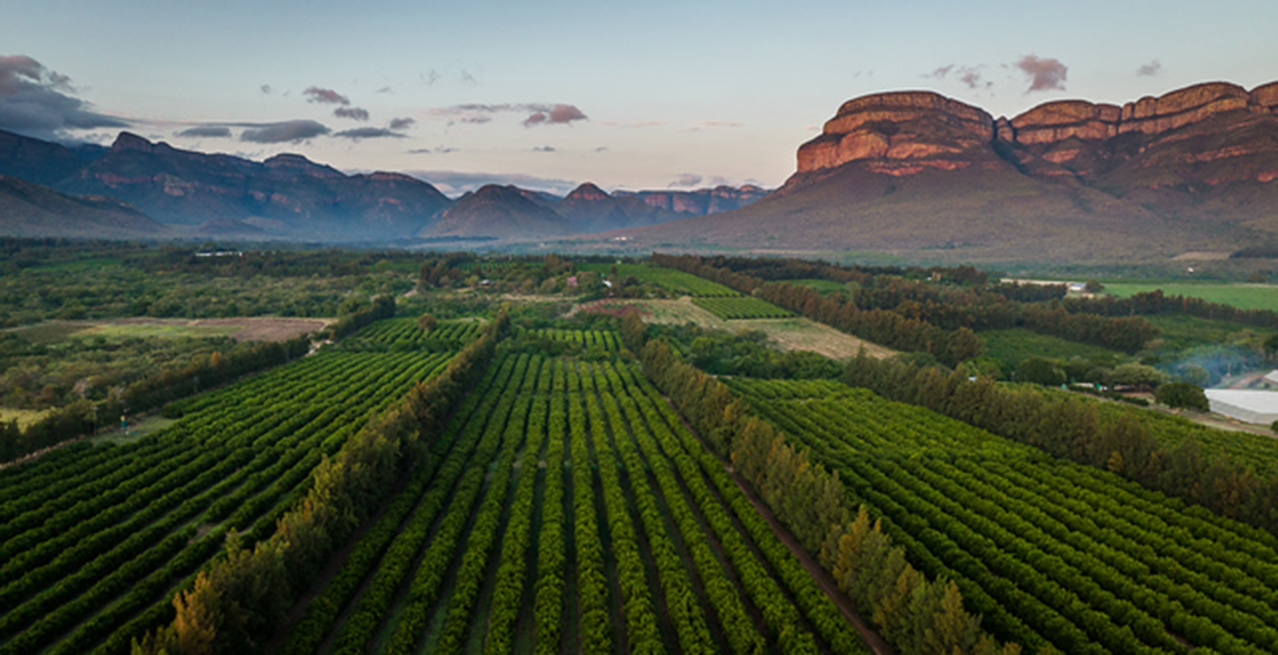
Citrus is South Africa’s largest fruit sector, with about 100 000 hectares under cultivation and more than R25 billion in annual exports. “The market wants a perfect fruit that is free of pesticide residues,” says Prof. Sean Moore, Research Manager at Citrus Research International. “Thrips make that a challenge to deliver.”
Scirtothrips aurantii (South African citrus thrips) is the only economically significant thrips species in citrus. All life stages feed on young leaves and fruit. Although quality is unaffected, feeding damage detracts from fruit appearance.
Citrus trees usually flush three times per year, with the early flush coinciding with the start of spring. Left unchecked, thrips populations can explode on the new growth. When the leaves begin to mature, the insects move to the recently set fruit. Fruit are more vulnerable to damage during the first few weeks after setting, becoming less susceptible as they grow and harden.
“Thrips reproduce quickly, and they can cause a lot of damage in a short space of time,” says Moore. “Once that damage is done, it cannot be corrected.”
The big five
“We speak about the big five pests that we have on citrus: false codling moths, fruit flies, mealy bugs, red scale, and thrips,” says Moore. “We can effectively control four of those five without leaving any chemical residues on the fruit, or even without any chemical intervention whatsoever.”
Thrips are the fifth pest. “We do need chemical interventions for thrips, which requires a very high level of sophisticated management,” says Moore. “We need to avoid broad-spectrum chemicals with long residual periods that erode the biocontrol complexes of the other groups of major pests.”
Furthermore, the citrus industry applies dithiocarbamate fungicides to control citrus black spot, a quarantine disease for certain export markets. These fungicides hinder the reproduction of predatory mites (Euseius species), the main natural enemies of thrips.
“Nobody has managed to rear those mites for augmentative releases yet,” says Moore. “Hence, we try to boost their populations in the orchard before thrips numbers build up.”
Other predatory mite species are commercially available, but Moore has not seen scientific evidence supporting their release for thrips control in citrus orchards.
Timing is everything
When asked what separates effective from ineffective thrips control, Moore replies without hesitation. “Monitoring and timing of treatments,” he says. “Although it’s easier said than done because of citrus black spot.”
Citrus black spot control rests on a calendar spray programme of up to six applications. Many growers combine their thrips sprays with black spot applications, which can lead to suboptimal timing of thrips sprays.
“Farmers who adjust the timing of their sprays, or spray for thrips between fungicide sprays, based on scouting, get better thrips control,” says Moore. “They will also more easily get good results from softer, more IPM-friendly thripicides.”
Monitoring should start before fruit set, so that growers can initiate control while thrips populations are low, keeping in mind that cooler weather is likely to delay the onset of infestations. Thripicides applied too early will have lost residual action by the time thrips arrive, meanwhile knocking back natural predators.
“The advantage of the predatory mites is that they become active above 11 °C, while thrips only become active above 14 °C,” says Moore.
“During the cooler times of the year, in spring, if those predatory mites are present, they’ll get up early in the morning, move to the fruit, and hammer the thrips before the thrips can even become active.”
Beyond chemicals
According to Moore, cover crops bolster biological control by improving orchard microclimate for sensitive beneficials, providing a refuge from spray applications, and supplying alternative food sources.
“We strongly promote the use of ground covers,” he confirms. “So, we currently have a few projects looking at their effect, including directly on predatory mites and thrips levels. We have a PhD student who is working on developing complementary approaches to help manage thrips.”
Among the other questions the project aims to answer are whether pruning practices and the nutrient levels in citrus leaves affect thrips populations, whether it’s possible to feed predatory mites in the citrus trees artificially, and whether repellents can reduce thrips populations in trees.
“These are all alternative methods, as we’re trying to move away from depending on harsh chemical pesticide control and toward using softer products as part of a multi-faceted approach,” concludes Moore. “We have to be creative and innovative in dealing with the thrips challenge.”