
Insights supporting the needs of the industry.
Berries ZA facilitates and supports research focused on production, plant health, logistics, export requirements, and post-harvest performance.
Working alongside researchers, technical specialists, and industry partners, we help to coordinate projects, share findings, and support research relevant to the needs of the industry.
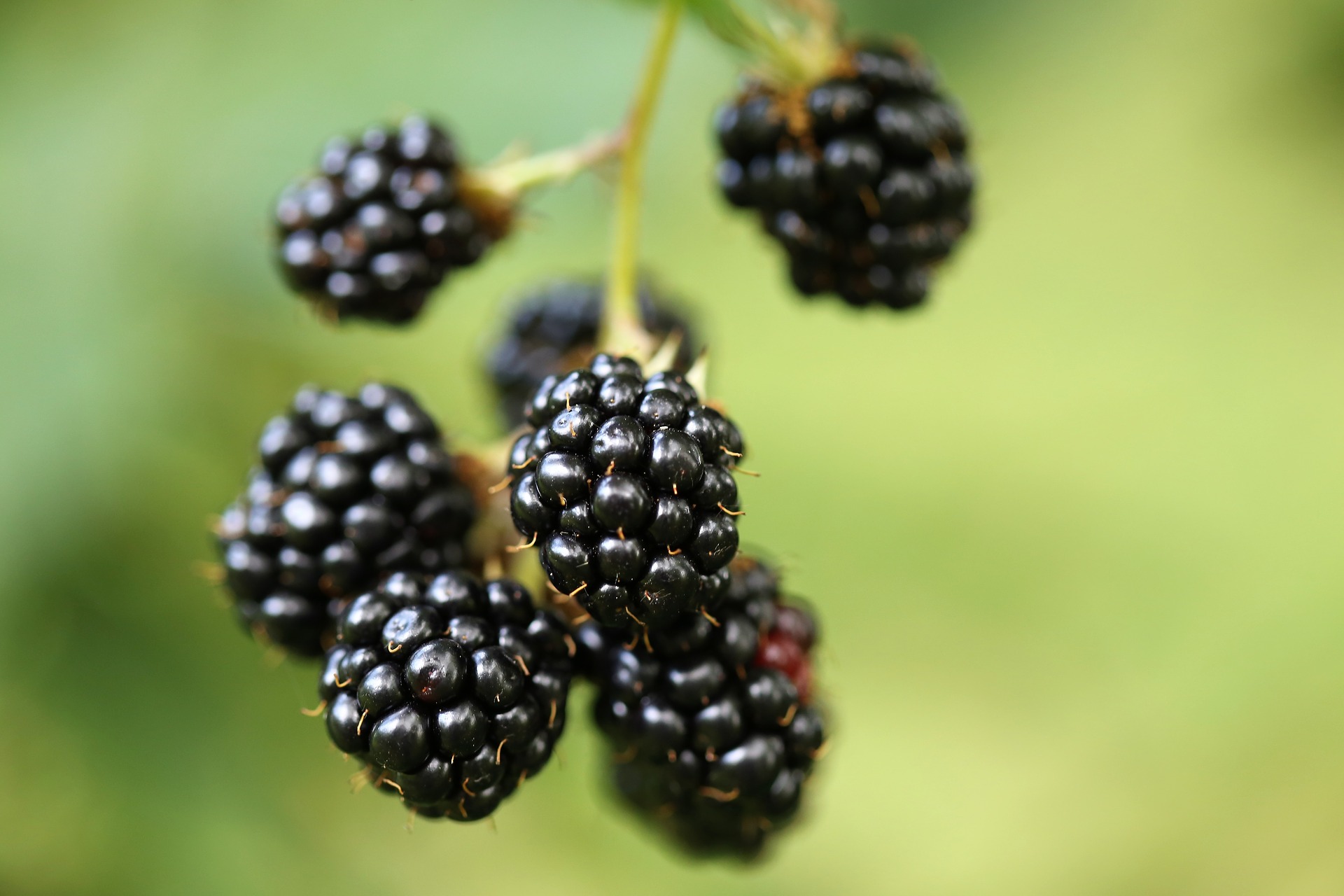
An update on the new Berries ZA research framework and summaries of all our current research projects.
Berries ZA recently completed a framework designed to guide our research initiatives over the next 5–10 years. The resulting document outlines the principles and practices determining which projects will be funded and how the research process will be managed.
A research and development working group representing key research areas — crop production, crop protection, postharvest, and market access — will meet quarterly to analyse gaps, evaluate proposals, allocate funds, and review progress. The working group includes growers, researchers, and other stakeholders.
Our current research projects

Postharvest decay caused by Botrytis cinerea results in significant economic losses, but controlling B. cinerea is difficult because its airborne spores are literally everywhere. B. cinerea is also notorious for developing fungicide resistance.
A multi-faceted project led by Prof. Karin Jacobs and co-funded by BerriesZA and the Post-harvest Innovation Programme is studying where and when B. cinerea occurs in the field and the pack house. The research team includes postgraduate students Amy Bysshe, Zach Charles, Rocky Kleintjes, and Taj Lorenz.
By measuring spores, the group aims to identify factors, such as weather conditions, that are associated with an elevated risk of infection. Doctoral student Janine Schuin is also investigating whether honeybees can carry B. cinerea between plants.
Scheduled for completion in 2026, the project includes evaluating the fungicide sensitivity of B. cinerea isolated from blueberry plants and fruit.
In a separate project, Prof. Lise Korsten and MSc student Carl Schulenburg recently assessed the use of UV-C irradiation for the postharvest control of B. cinerea. Read more about the results here.
MSc student Inge Coetzee is analysing leaves, twigs, flowers and fruit from three commercial farms to discover which Alternaria species are present, their genetic relationships, and seasonal distribution on flowers and fruit.
Additionally, the researchers will test the fungicide sensitivity of Alternaria isolates from various farms. The project is scheduled for completion at the end of 2025.

Fungi not only cause postharvest decay — they also attack nursery plants. The impact of nursery infections is not limited to direct losses of affected plant material. Nursery infections can potentially be carried over to adult plants, serving as a source of fruit infection and decay.
In a BerriesZA-funded project led by Prof. Lise Korsten, MSc student Lourens van der Vyver sampled visually diseased leaves and twigs from six commercial blueberry nurseries to identify the 15 most common fungi. He assessed their ability to cause disease by inoculating healthy leaves and plants.
Botrytis cinerea was the most common fungus across the six nurseries. However, the study revealed several new pathogens associated with blueberries. Final results will be available in the second half of 2025.
Thrips have emerged as a significant pest of blueberries. They reduce plant performance by feeding on new growth, and they damage fruit during early development by feeding and egg-laying.
Chemical control of thrips presents many challenges, and there is a continuous influx of the tiny insects from alternative hosts surrounding the orchard.
Therefore, a new Berries ZA-funded study, led by Prof. Pia Addison and Dr Gulu Bekker, is taking a different approach to thrips control — preventing them from entering in the first place. The researchers will test different nets to determine the best mesh size and colour to exclude thrips.
They will also investigate the use of insecticide-treated nets.
The project began recently and is scheduled to run through 2026.

The invasive spotted wing drosophila (SWD) has become a serious pest in South African berry production. Besides damaging fruit, the flies could also affect trade, should one of our markets require postharvest mitigation measures.
Berries ZA has commissioned a new project, led by Dr Renate Smit, to develop mitigation measures for blueberries, especially fruit destined for air freight. Work has started, and preliminary results are anticipated by the end of 2025.
Smit will test the effect of ethyl formate and nitric oxide fumigation on SWD mortality and fruit quality. If these methods show promise, she will conduct the necessary trials to generate the verification data required by trading partners.
She will also verify cold-sterilisation regimes for SWD control.
Besides the postharvest mitigation work, Berries ZA is co-funding SWD research on integrated pest management and risk — more details are available here.